
About Gage
An innovative and accessible contemporary art school
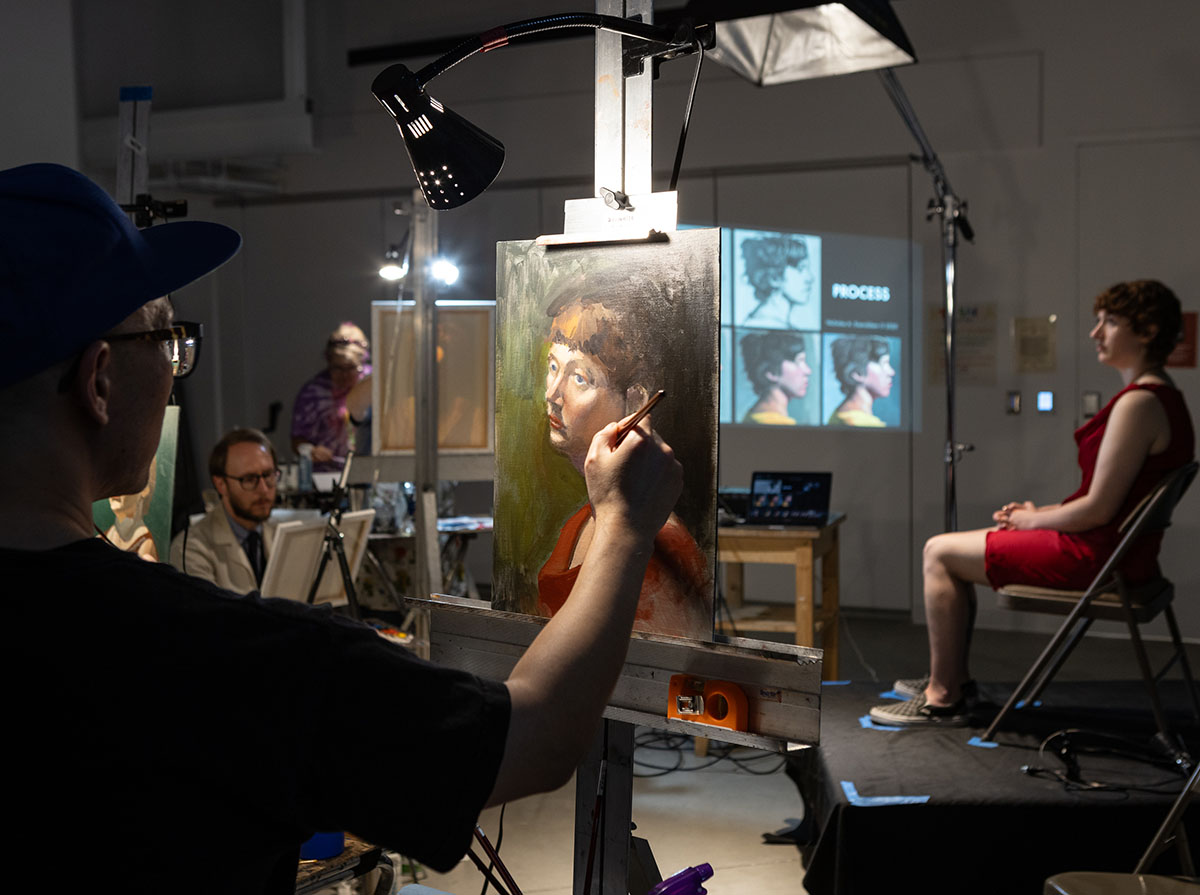
Gage Academy of Art is unapologetically independent and fiercely committed to excellence in the fields of painting, drawing, and sculpting. Celebrating 30+ years of service to the community, we believe in personal mentorship and skills-based studio instruction, delivered by brilliant teaching artists. Whether you are a curious newcomer or a professional artist, a working creative or a retired passion-seeker, Gage is open to anyone with the desire to learn. We invite art makers of all ages, abilities, and backgrounds to become part of a vibrant learning community, with access to the best art instruction, free programs, lectures, demos, events and enrichment all year long.
Each year Gage enrolls more than 3,000 adults and youth in ateliers, classes, workshops, and youth programming and welcomes another 8,000 community members to our campuses, partner locations, and online for free lectures, free youth programs, community art programs, and family-friendly events.

Our Mission
Gage educates, enriches, and transforms our community through the visual arts.
Our Vision
Gage envisions a world where the visual arts are valued as a vital human endeavor.
Our Core Belief
Gage believes artists are made, not born.
Our Values
-
We are a strong defender of artistic independence so that artists can create without constraints
-
We are committed to maintaining equity and accessibility to visual arts education
-
We are committed to excellence in drawing, painting, and sculpting
-
We are actively working to maintain a strong and vibrant arts community in Seattle
Frequently Asked Questions
We have two locations: our new home in South Lake Union at 2107 Westlake Ave and our versatile studio space in Georgetown at 6520 5th Ave S., Seattle 98108.
Read more and plan your visit, including parking tips.
Yes!
South Lake Union Campus: Gage staff can validate your parking if you park in any of the Amazon garages. Pull a ticket as you enter the garage and bring it with you to Gage. Your ticket will be validated at the Registrar’s Desk in the lobby area.
The Re:invent building garage is adjacent to the Gage SLU facility. Enter the garage off 8th Avenue at the corner of 8th and Blanchard.
Parking will be free with validation at any time for the first three years. Parking is always free at 4 p.m. and on the weekends in Amazon parking garages.
Georgetown/Equinox Location: There is free street parking available on a first come first serve basis.
Register through your Gage Account. Create an account or sign in to enroll, manage your info, and access confirmations and receipts: https://gageacademy.org/gage-account
No prior experience is needed for many beginner-level classes. Gage offers art classes for all skill levels, from total beginners to advanced artists.
Gage offers a wide range of drawing, painting, sculpture, and mixed media classes for youth, teens, and adults. Programs include short workshops, year-long Atelier programs, and open studios.
All participants in Gage art programs are recommended to be fully vaccinated & boosted. Masks are at the individual's discretion.
We offer both in-person and online art classes. Online courses are tagged with a light blue Online box. You can find this information on the individual class registration pages or customize your search by filtering for online under the Venue filter.
Gage offers weekend art workshops and one-day intensives throughout the year. These are great for beginners or those looking to explore a new medium.
After you enroll in a class you are officially on the roster and are good to go! If you are taking an online course you should expect to see an email closer to when the course begins with the zoom information. If you are taking an in-person class, we will send out an email letting you know what classroom it will be shortly before it starts so you know where to go.
To use your class credit you will need to call our registrar at 206-323-4243 and they will apply the credit manually.
Our refund policy can be found on our website all the way down on the bottom right corner listed as financial terms. Please note that whenever you drop a class or a workshop, the registration fee of $20 will not be refunded.
Not all of our instructors record their classes, but if you have to miss a day or might not be able to attend the course during the scheduled timeslot, please let us know and we can put in a request to see if the instructor would be able to send you recordings of the sessions! Please feel free to email us at info@gageacademy.org with your request and we will see what we can do for you.
All supply lists for our classes can be found on our website when you click on the enroll now button, and it takes you to the registration page.
Yes! Learn more and register here.
We accept in-kind gifts or services on a case-by-case basis. Please contact Carl Gellert, Advancement Manager at gellert.c@gageacademy.org
Art Supplies - We kindly accept art supplies that are in original packaging or very gently used. We cannot accept solvents of any kind. All items need to be reviewed to see if we have space and need. Please contact Jessica Heide, Director of Programming at heide.j@gageacademy.org
Arts Equipment - will be evaluated on a case by case basis. To discuss your donation please contact Please contact Carl Gellert, Advancement Manager at gellert.c@gageacademy.org
Yes! We welcome art donations for our annual Art Auction & Gala, supporting free and low-cost programs at Gage.
To donate artwork or discuss custom contributions, contact Carl Gellert at gellert.c@gageacademy.org
Yes, Gage Academy is a 501(c)(3) nonprofit organization. Donations without exchange of goods (like tickets or merchandise) are 100% tax-deductible.
Federal Tax ID: 91-1992593
Yes, whether you donate online, via mailing a check, or through your donor advised fund, you will receive an official tax-receipt letter (where appropriate) and a big THANK YOU from us!
There are many ways you can make a legacy gift to Gage.
For assistance, please contact Carl Gellert, Advancement Manager at gellert.c@gageacademy.org
In the case of inclement weather, and in consideration of the safety of students, staff, and instructors, Gage may adjust opening hours or cancel classes. Gage no longer follows Seattle Public Schools’ weather closure decisions but makes decisions based on Gage’s particular situation. The decision will be posted on the Gage website and shared on Facebook and Instagram by 6:30 a.m. when inclement weather is predicted.
For real-time updates, please check our website and social media. Online classes will continue as scheduled, regardless of weather conditions, unless otherwise noted.
Gage offers programs for:
- Youth (ages 6–11)
- Teens (ages 12–18)
- Adults (18+)
We also host family-friendly events and workshops.
Once you register, you're officially on the class roster, no further steps are needed other than to procure your class supply list.
- Online classes: You’ll receive Zoom login details via email in the confirmation as well as the reminder emails.
- In-person classes: You’ll receive an email with your classroom location just before the first session.
- Adult classes: Most adult classes have a required supply list to purchase ahead of the first class. Please review the registration page to find your classes supply list. Note: youth classes supplies are provided by Gage.
We provide tuition assistance for youth and adult students based on need. Deadlines and application info can be found on our Tuition Assistance page.
↵
↵
Covid Policy
- All participants in Gage art programs are recommended to be fully vaccinated & boosted. Masks are at the individual's discretion.
- If you are symptomatic, believe you had an exposure, or have a positive test and were at Gage for class, we ask you to notify us at safety@gageacademy.org and to follow the CDC's Isolation Guidelines.
- If you have any signs of illness, we ask that you refrain from coming to Gage until you are symptom free for at least 24 hours. This includes symptoms of flu and the common cold, like fever, sniffles, runny nose, sore throat, as well as symptoms of COVID infection.
- Should you get an alert on your mobile device, please get tested. Even if you don't immediately test positive, we would still recommend staying home and continuing to test.